Older Women’s Housing.
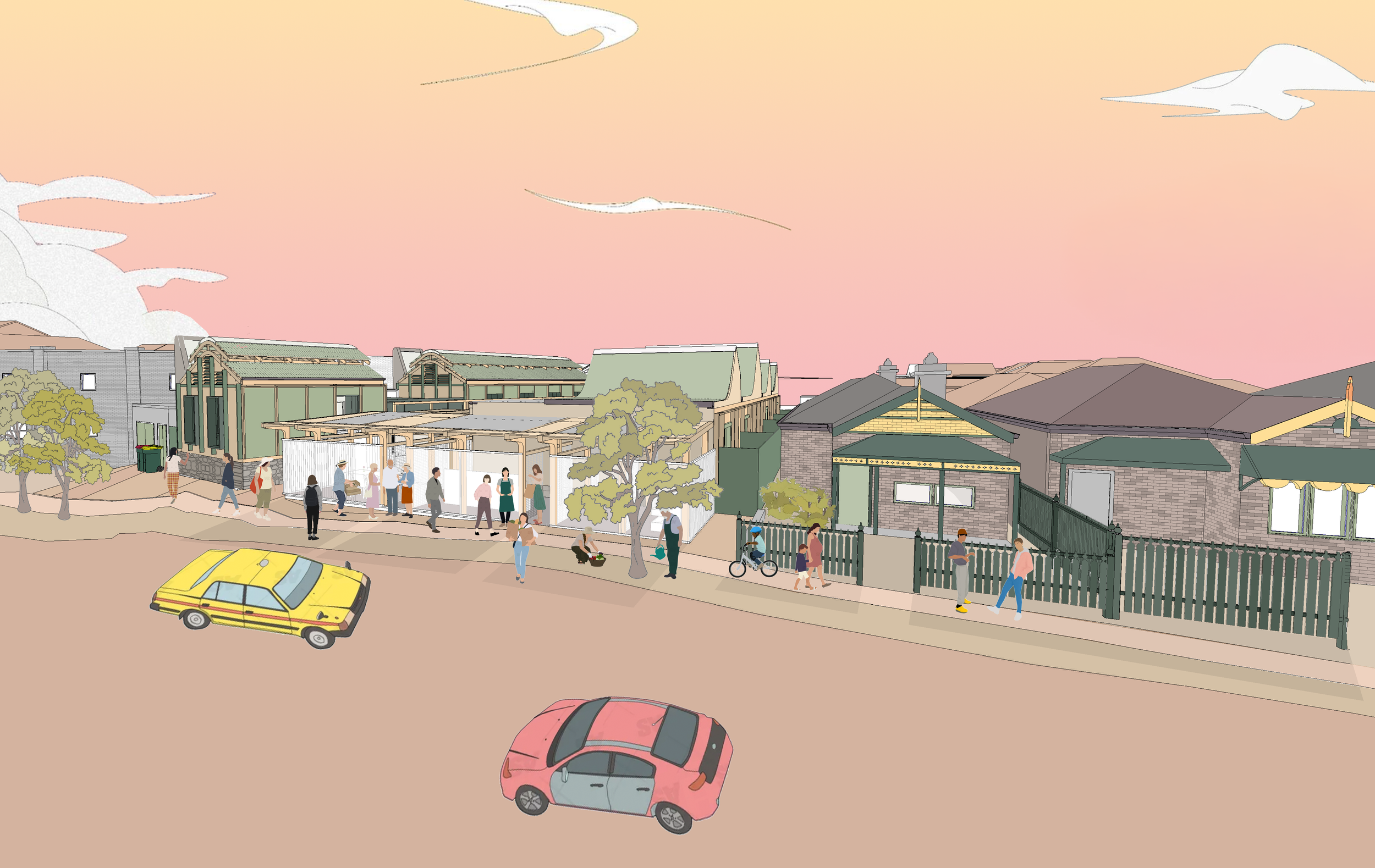
Stanmore, Salisbury Road
2022
Housing for Older Women in the Inner West
PROJECT BRIEF
Overall Axonometric of the Proposed Design Within Stanmore
The project brief outlines the aim to explore the co-existence of different older women under varying circumstances that lead them to seek accomodation in social housing; and imagining the conditions between this concept through spaces of communication and understanding, and thresholds that blurs the line between the public and private. This relationship, paired with the investigation of each program promotes thought on designing spaces that are comfortable whilst developing a strong understanding of their dissimilar values, shedding light on each inhabitants necessities and wants.
By focusing and honing in on their beliefs, an attempt to create a scheme that enhances the program’s desire for its own private activities but also incorporating space for co-existence and shared use. This perception of shared and private spaces is distinguishably highlighted by the gradience of a shared space that slowly transitions into private areas from the wider Stanmore community .
The result, in this case, a building that effectively responds to these activities of living but also incorporates a balanced geometric form, and to provide ample interior space without compromising on natural light, views to the adjacent street or connection with nature. Ultimatey, this project aims to strengthen and preserve the notion of mental and physical health for women and thus, facilitate a community of growth and understanding of one another
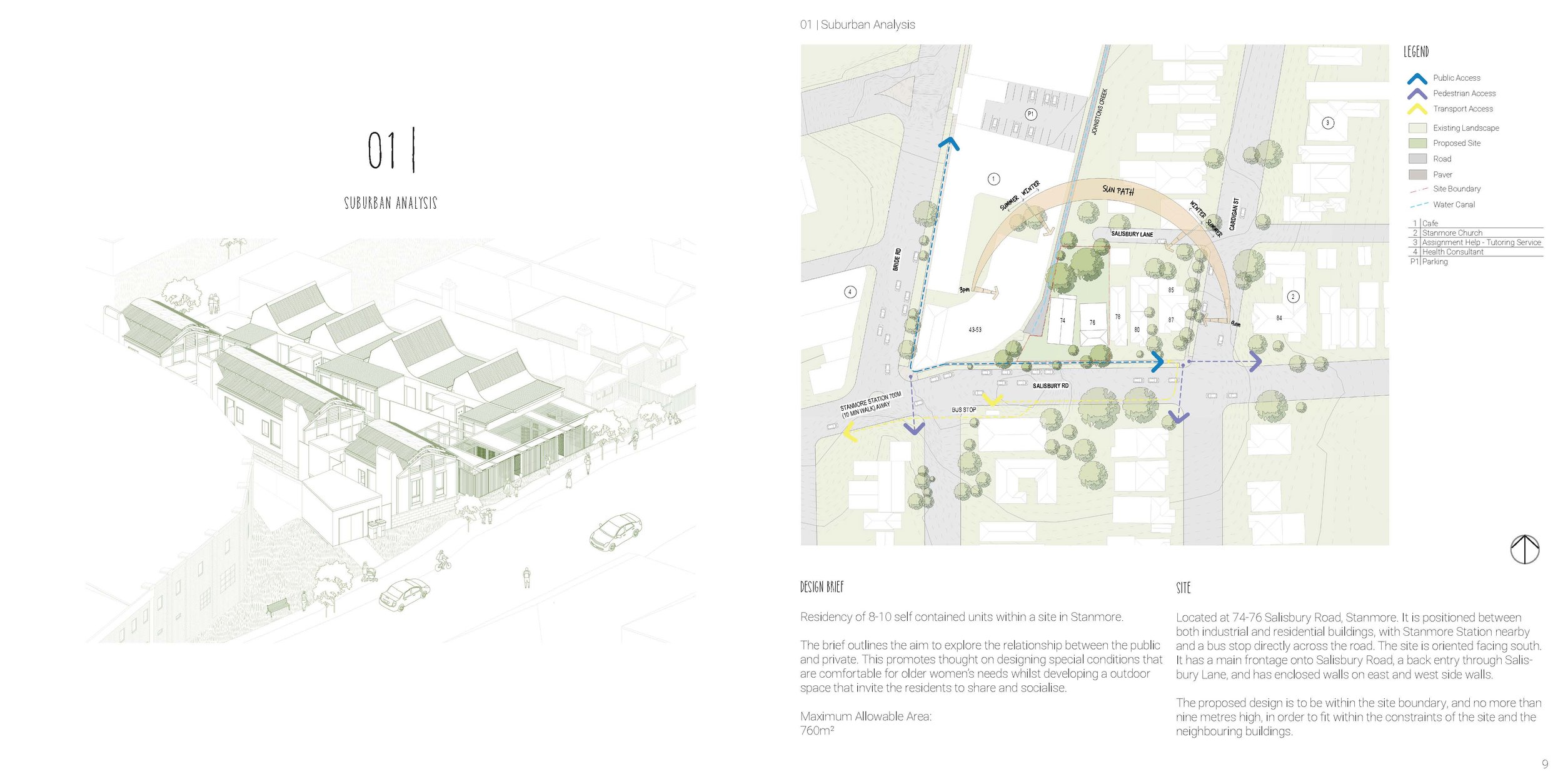
The proposed design is nestled amongst the quiet suburban landscape of Stanmore, and is intended for the inhabitants of older women in the inner west. Both the public and private can thrive and intertwine with the design of the building. The property is sandwiched between both the industrial and residential, and surrounded by the non-stop suburban life with main views towards the adjacent buildings and streetscape to the north and south. The proposed site itself is a flat landscape that allows the natural sunlight to blanket down from the north and north-east.
Thematic Principles
-
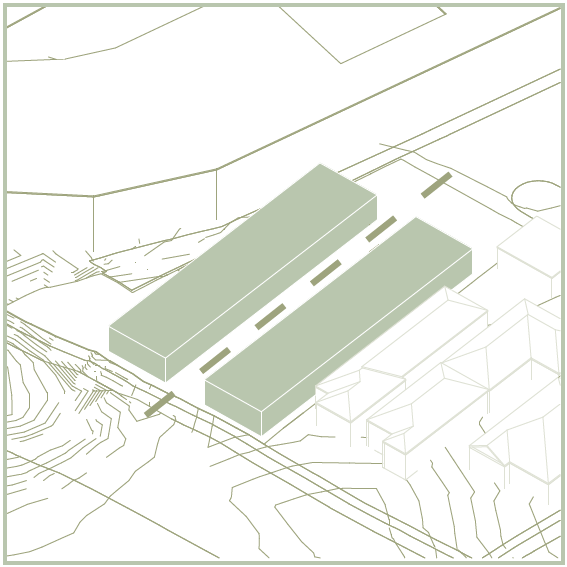
Separation Into Two Typologies
creating two buildings TO form a central green space
Allowing the residents to wander, socialise and relax in the outdoor green space whilst having the privacy of two differing building forms surround the perimeter of the sight.
-
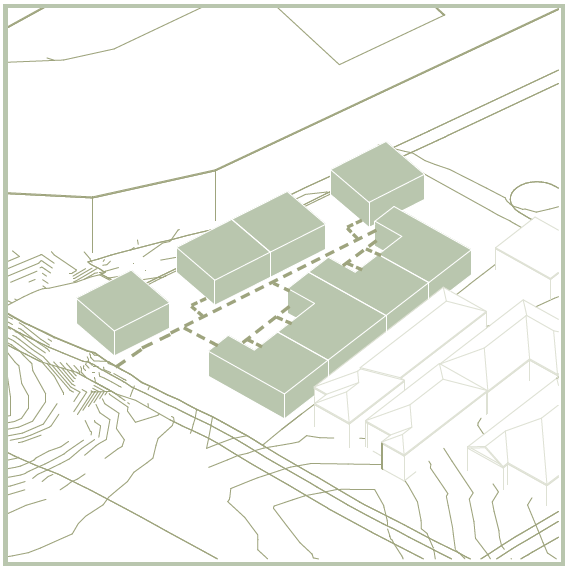
Pathways & Circulation
proposing creating intricate pathways TO promote exercise and circulation.
This design strategy allows the older women to explore around the open space and engage in casual encounters as they pass one another, or to explore on their own.
-
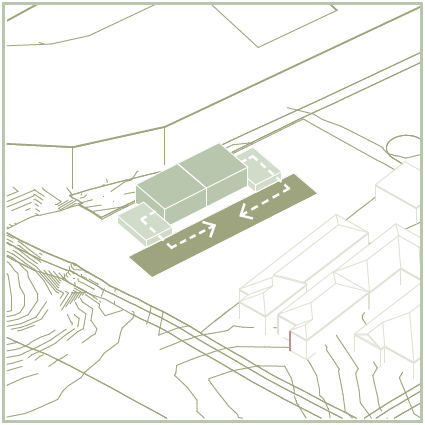
The Threshold
introduce a threshold TO blur the barrier between the public and private.
This is proposed to transition the women into a private but still outdoor space of their own. Allowing residents to go through a collective experience of travelling inside, then outside, and inside again.
-
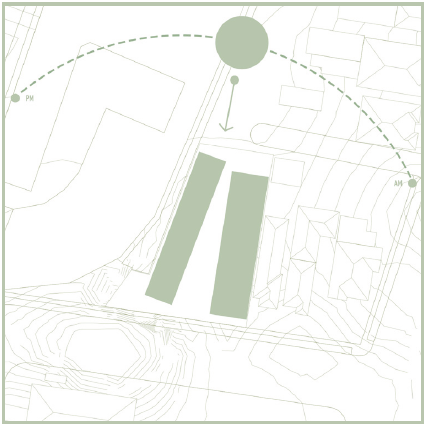
Sun Strategy
separate the mass into two unique buildings TO allow the natural sunlight to bathe the central green space as the buildings open up to the landscape
Opportunities for women to relax and walk around outside under the sun.
-
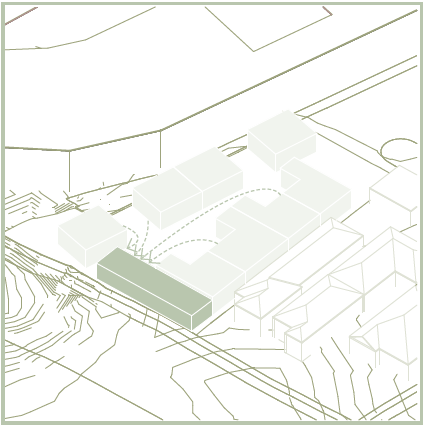
Socialising & Shared Spaces
creating gathering areas TO promote exercise and socialising
Places of meeting and casual encounters at the frontage of Salisbury Road allow the inhabitants to engage with the outside community and not just with themselves.
-
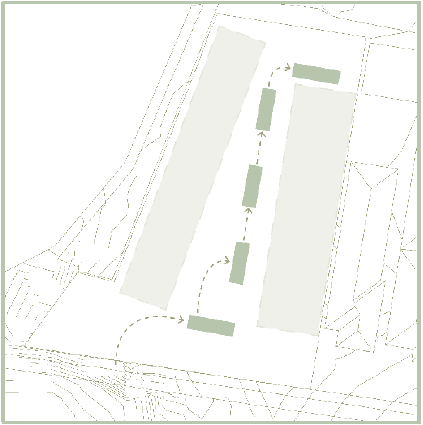
Seating Opportunities
proposing seating every half metre TO allow residents to relax and rest
This is especially crucial for those that have mobility issues or health conditions that cause them to feel tired frequently.
Existing Conditions
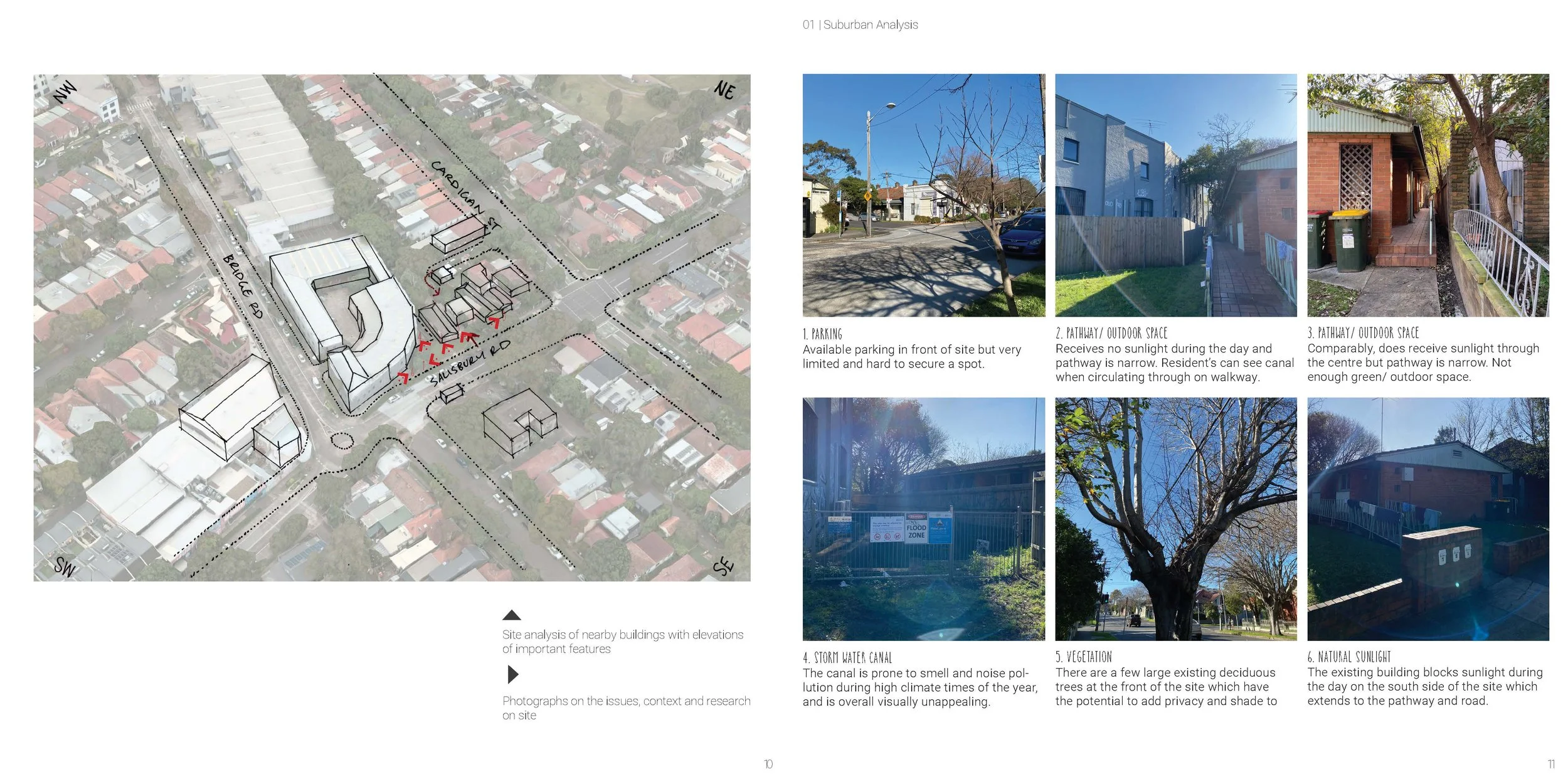
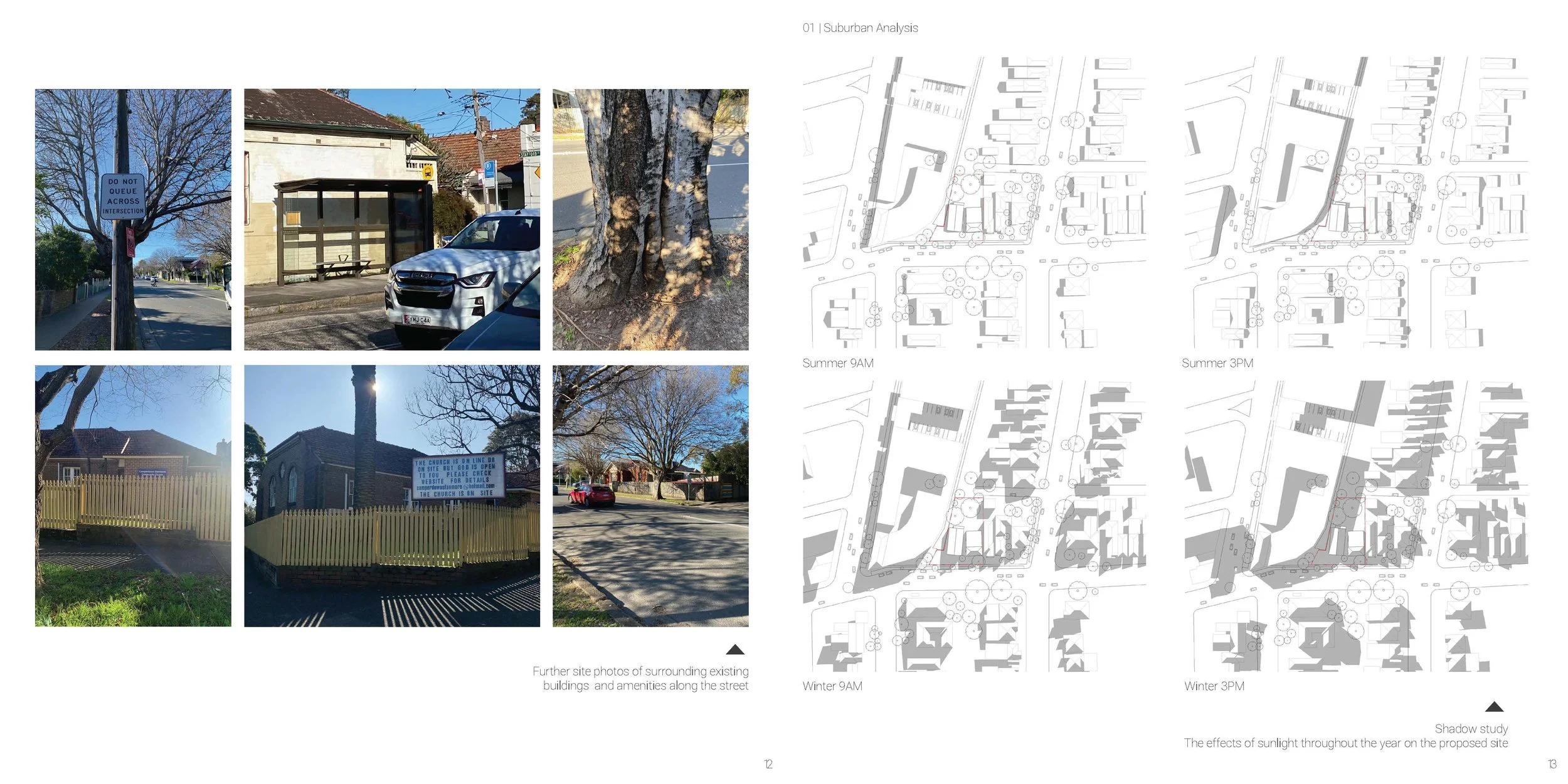
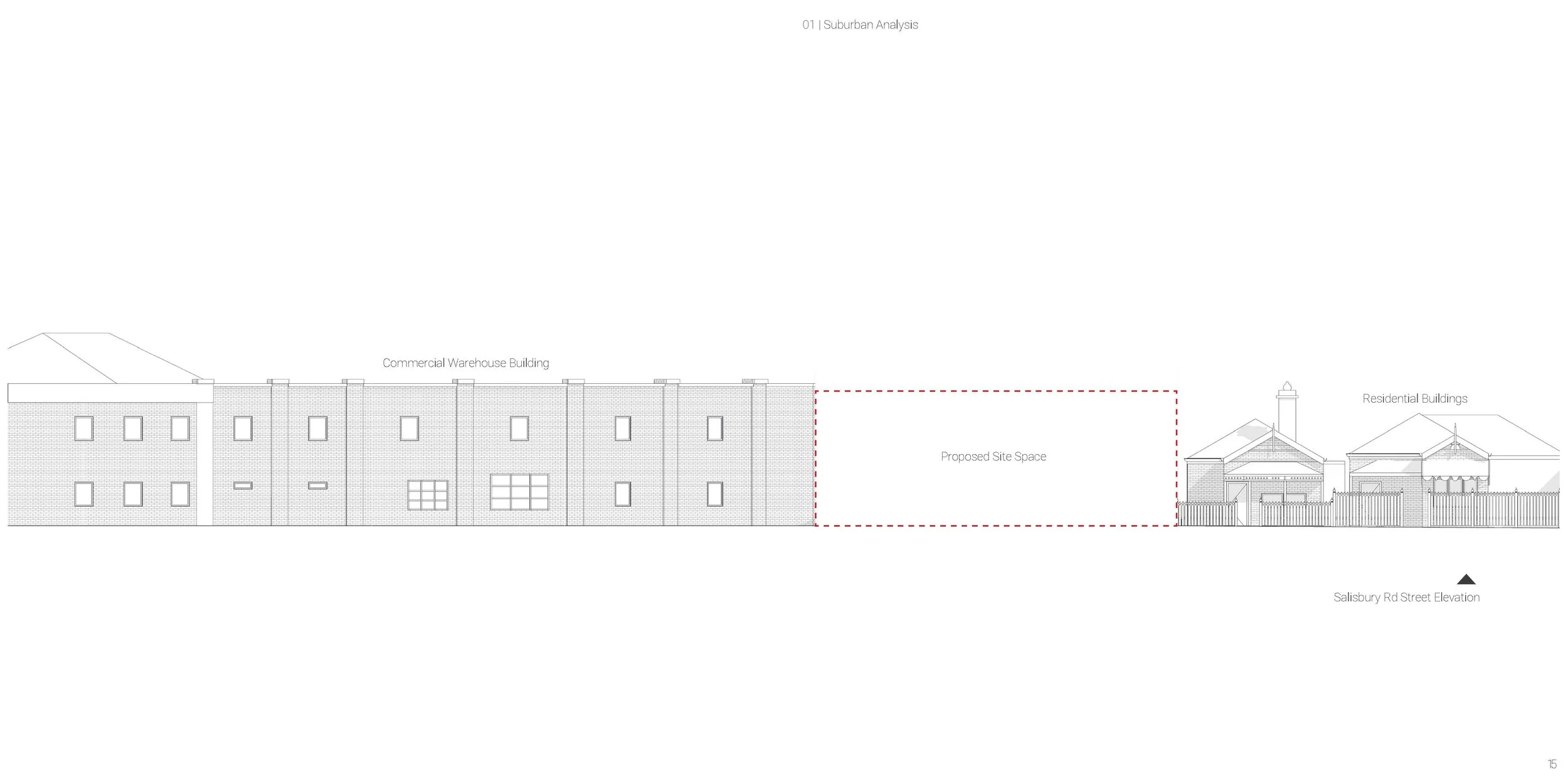
PLANNING PRINCIPLES
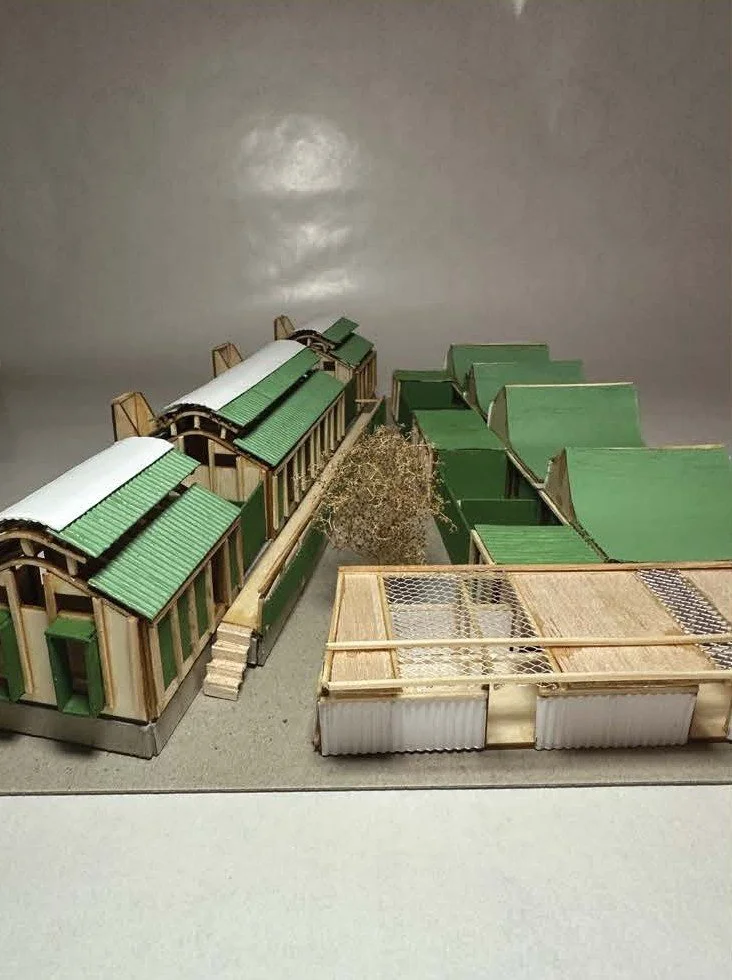
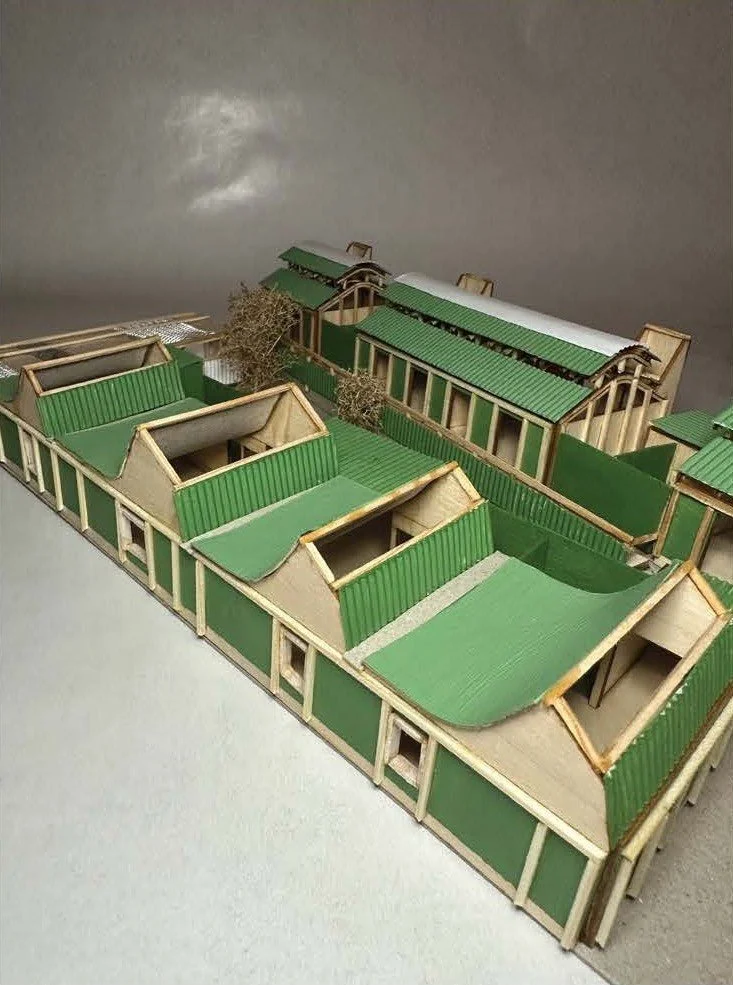
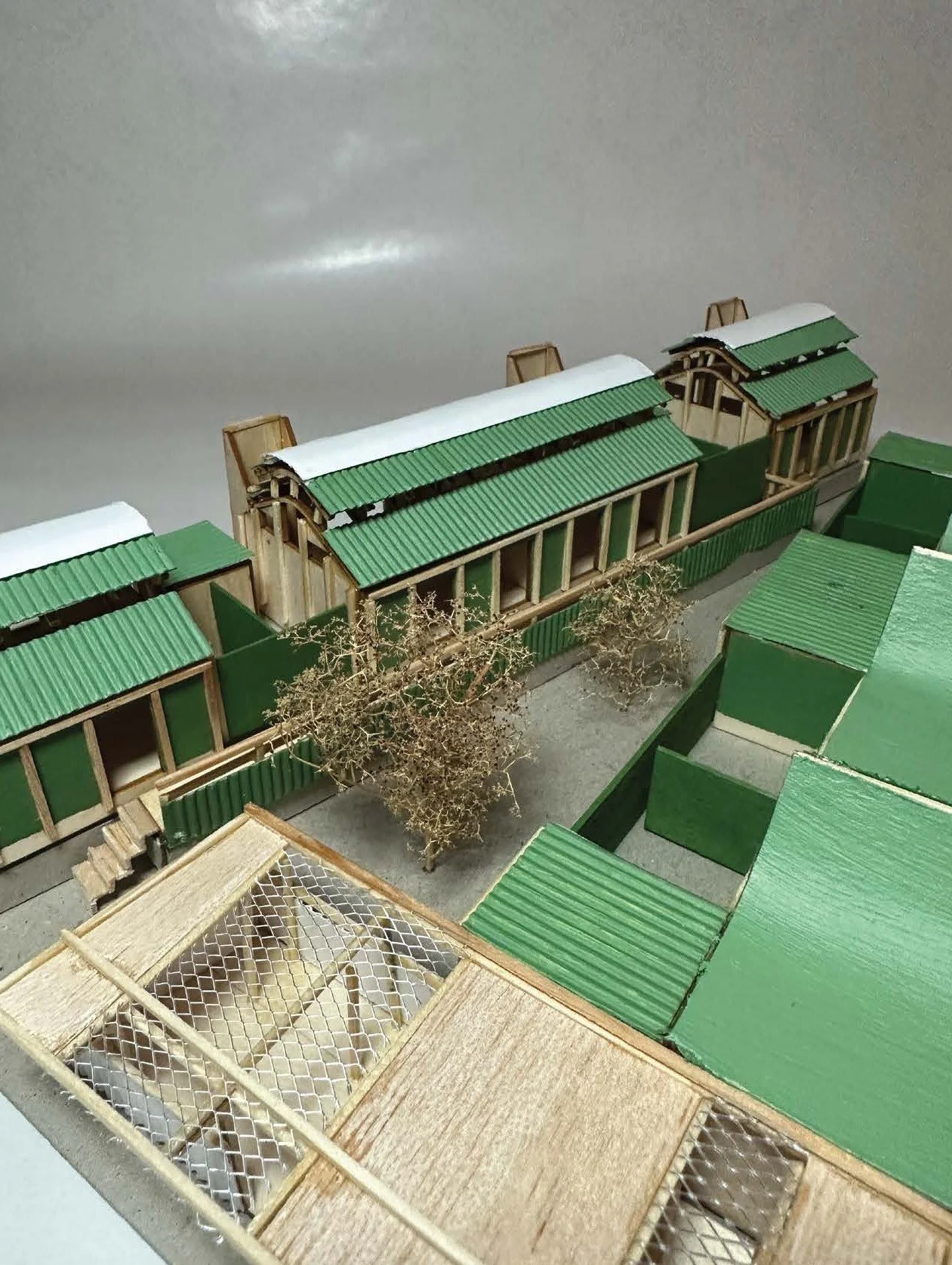
The transition of public, semi- public and private spaces that are re-arranged and considered to suit the resident’s needs and activties in their day to day lives. The unique design element of open green spaces between and around the units, represented through courtyards within each unit, and a main garden strip within the centre of the site to allow the clients to transition between going inside and outside of a space as they circulate.
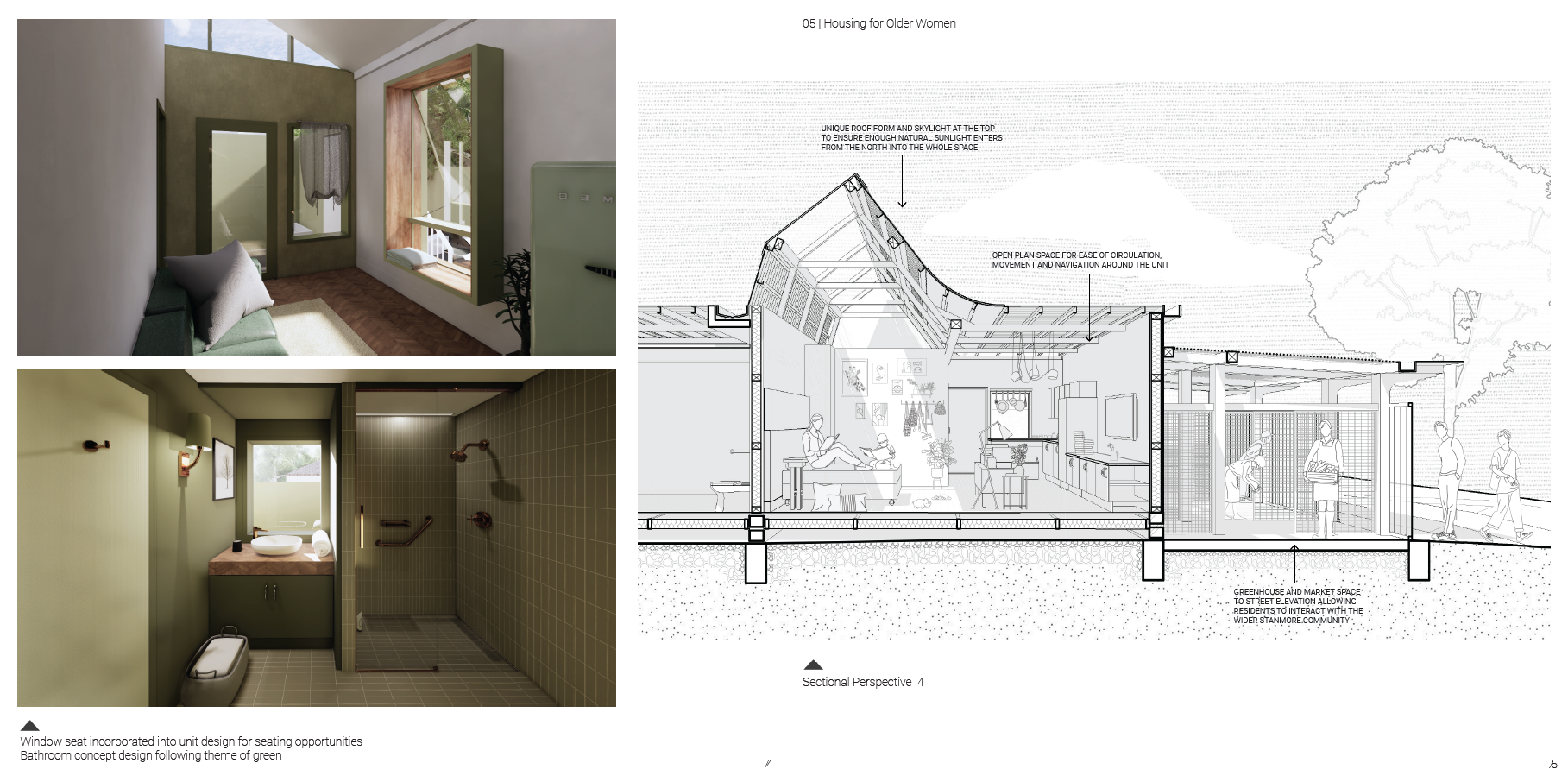
Situating the garden within the centre for optimal opportunites for natural sunlight to cast down onto the site during the day from the north. Incorporating a greenhouse and fruit and veggie market place for resident’s to interact not only with themselves but with the wider Stanmore community.
This study hopes to create a well rounded architectural building within Stanmore that responds to the existig site, project brief and thus develop a conceptual framework that evolves over time. The aim was to strengthen and preserve the notion of mental and physical health for older women in the inner west and thus, facilitate a community of growth and understanding for one another. Thus, exploring the arrangement of eight self contained units within the constraints of a small site to help house different inhabitants, creating an appropriate solution reflecting community and cultural engagement
Arranging the areas of my scheme, such as the open green space, unit spaces, and front greenhouse and market, invites individuals to communicate and build on this strengthening process not only with each other but with the outside community.
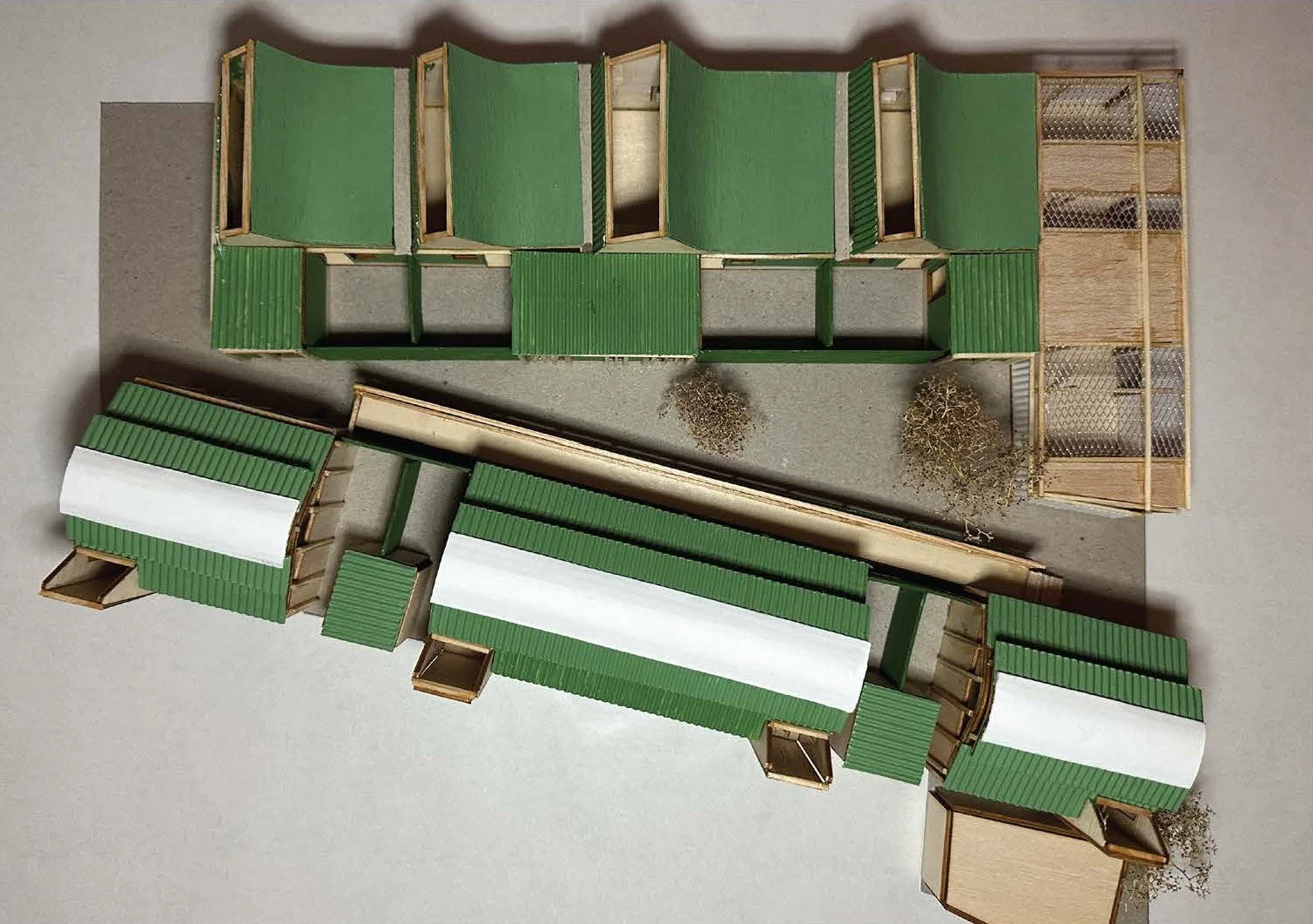
The threshold, individual private courtyards as the entrance to each unit, is surrounded with vegetation and plants as further connects the women with nature as they transition into an enclosed space. The design proposal is separated into two main unit buildings, leaving a large open space between which creates pathways and circulation which can promotes exercise. By splitting the design through the middle, natural sunlight is able to cover the outdoor spaces. Furthermore, the principle of a courtyard as a threshold is proposed to transition the women into a private but still outdoor space of their own. Proposed is shared spaces within the site to encourage socialising and meetings between the residents, and seating opportunities throughout the site to allow residents to rest.
The programs were arranged to surround a large outdoor gardening space with 8 units along the perimeter of the site. There is shared parking space for visitors and caretakers to the north, and having a market and greenhouse to the south to promote socialising not just with themselves but with the wider Stanmore community by sharing the items grown from their garden. Therefore, the analysis of programs through sketches and iterations inevitably helped in developing a project that attempts to invite differing women to co-exist not only with each other but with the building they reside.
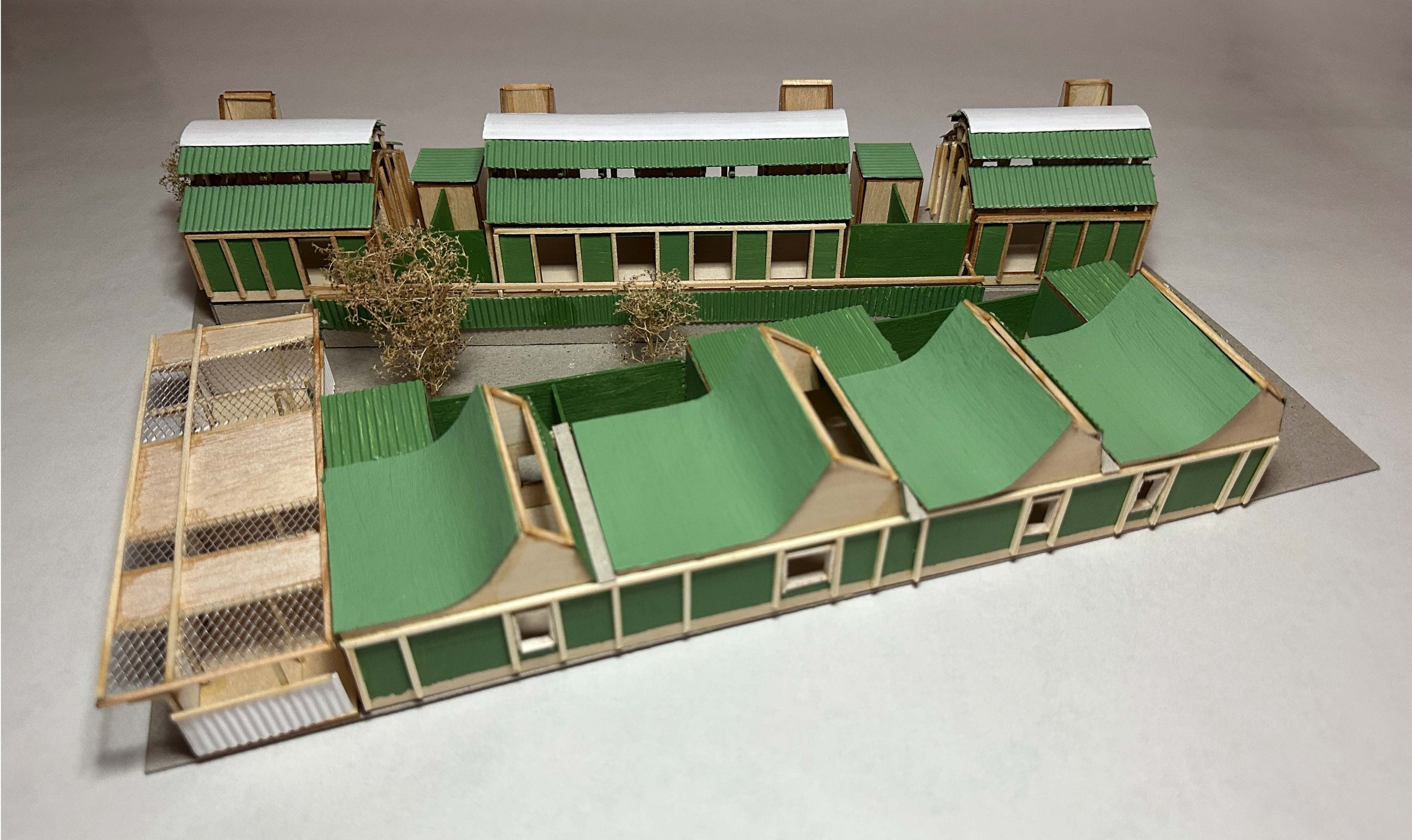
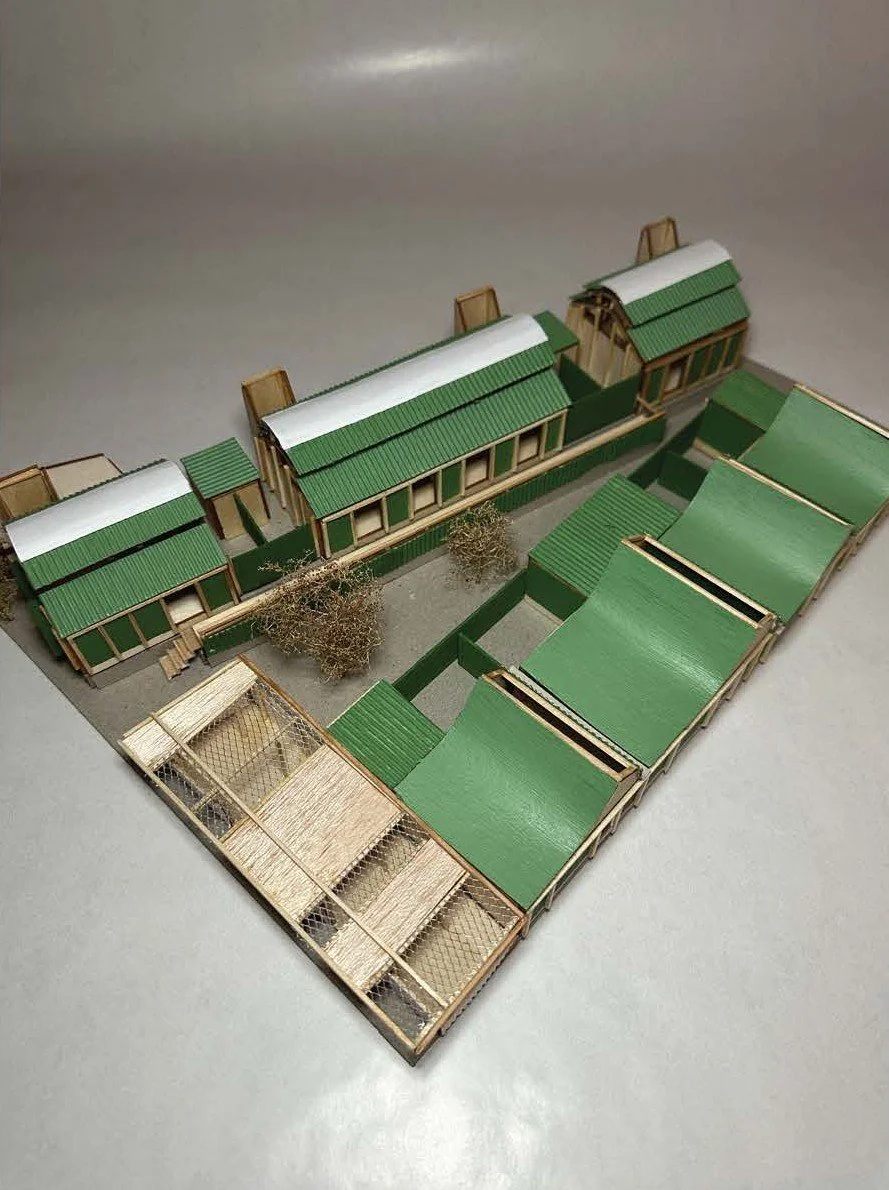
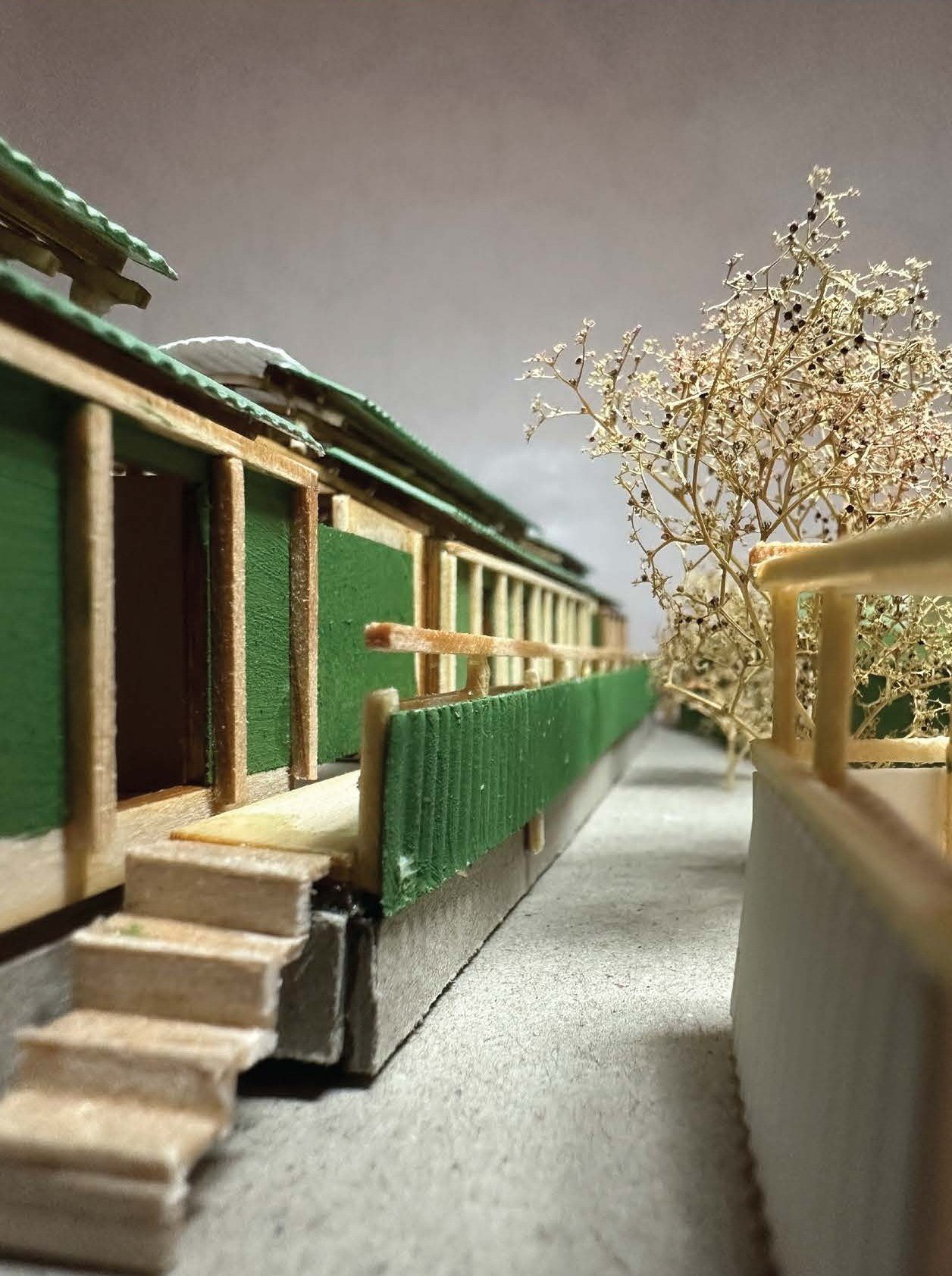
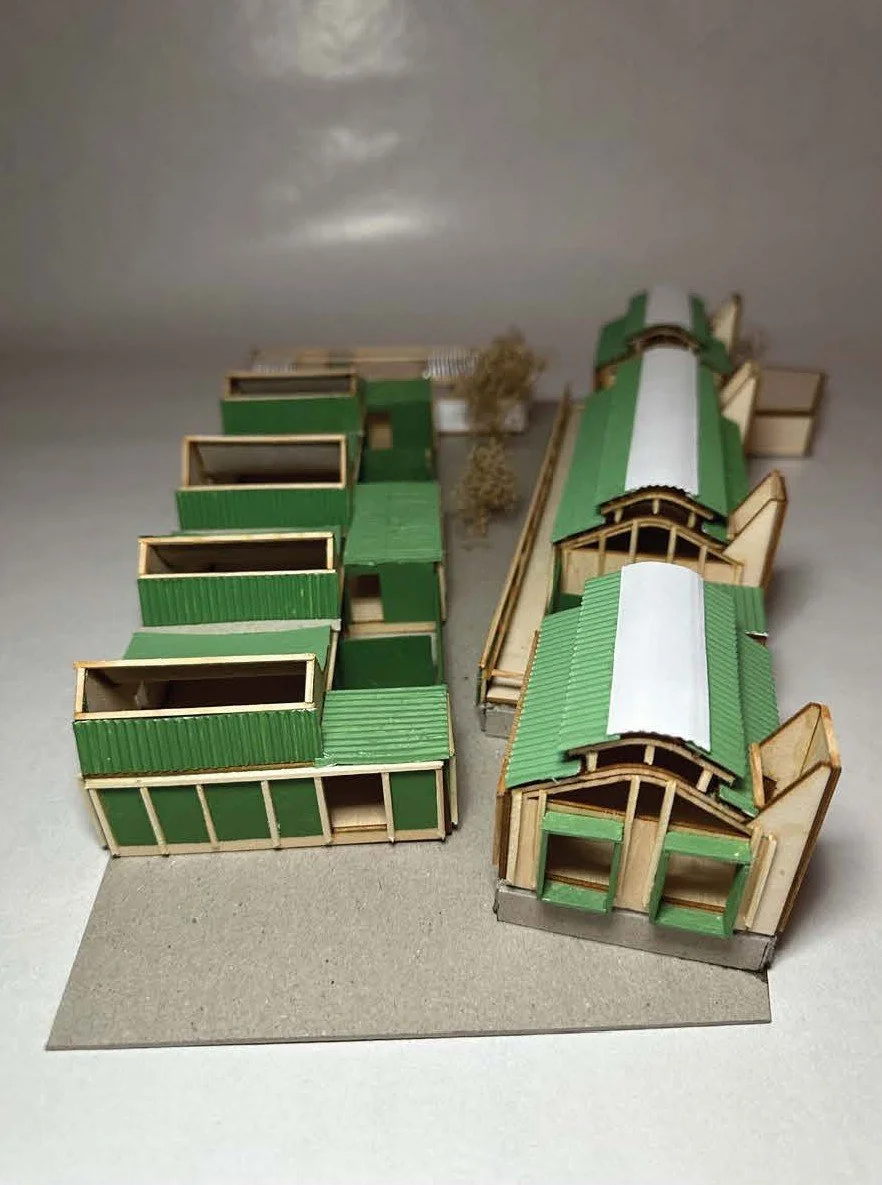
The Proposal
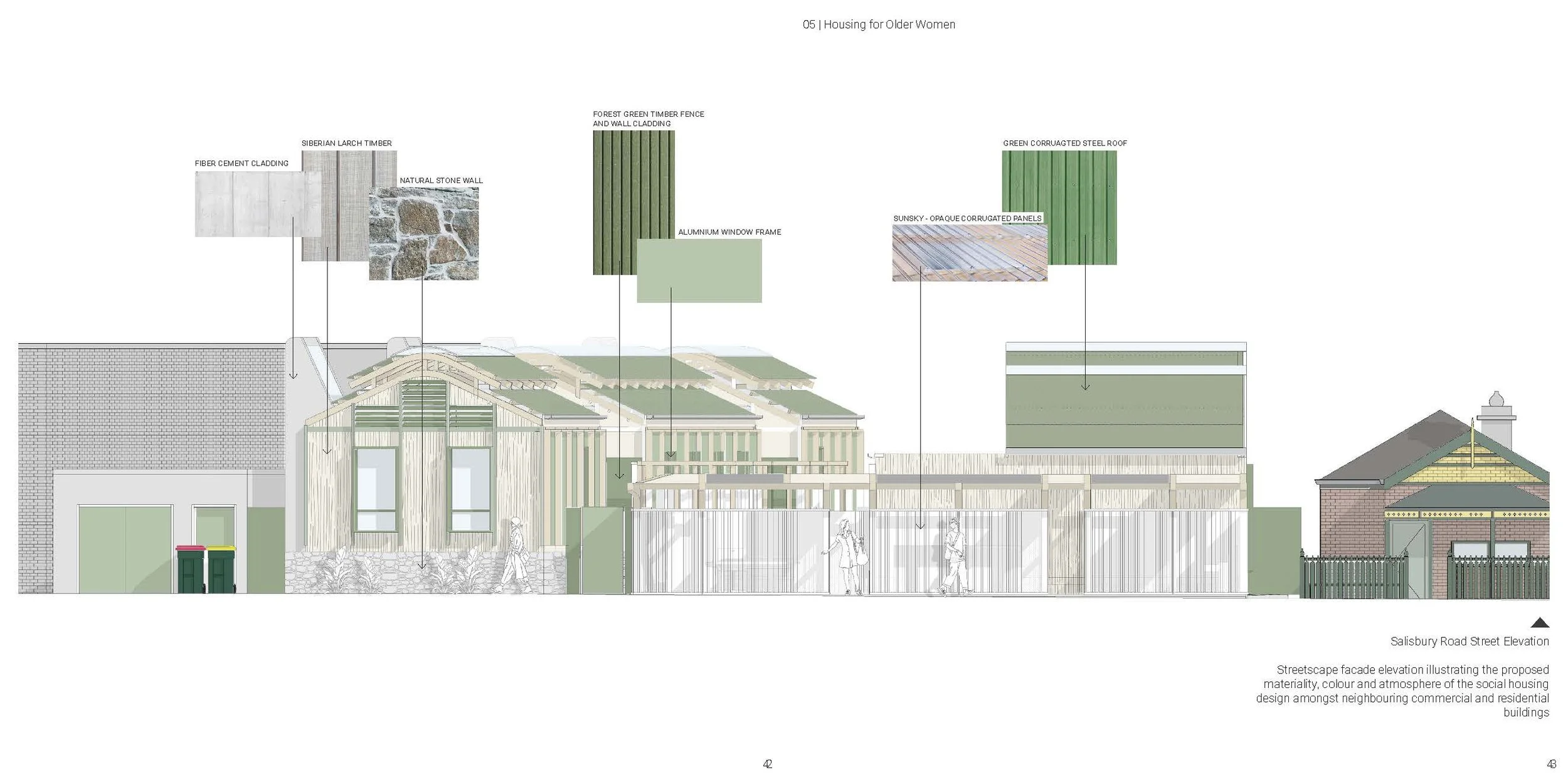
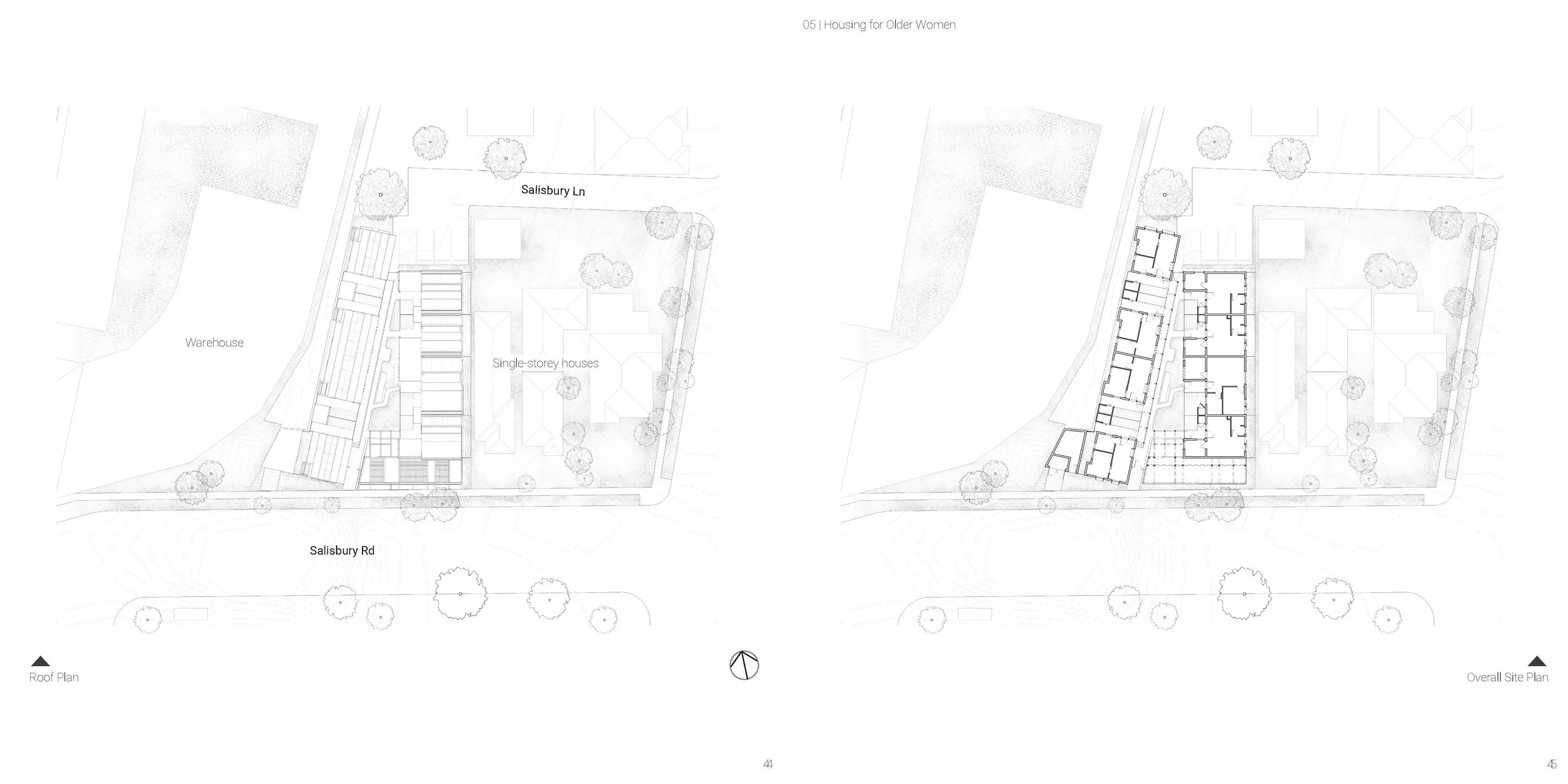
PROPOSED FLOOR PLAN AND TYPICAL UNIT PLANS
As social housing is such a sensitive program to design, it was imperative to create a domesticated and safe environment for women of different backgrounds to find sanctuary; keeping the design minimalistic, with light materials and simple colours, but structured all the while implementing the conceptual framework derived from the design principles that allow them to explore, discover, and socialise within the sight, but to also have safety and privacy within their units.
The design is supposed to not only create a place of co-existence between the women but facilitate a social hub open for them to discover and explore within the outdoor green space. There are moments throughout the building that urge and invite the inhabitants to engage in casual encounters and conversation to create an understanding of one another. Primary areas such as the greenhouse, front market, barbeque and lounge, gardening space, reading space, and open green area allow for discussion and connection between the users and the Stanmore community.
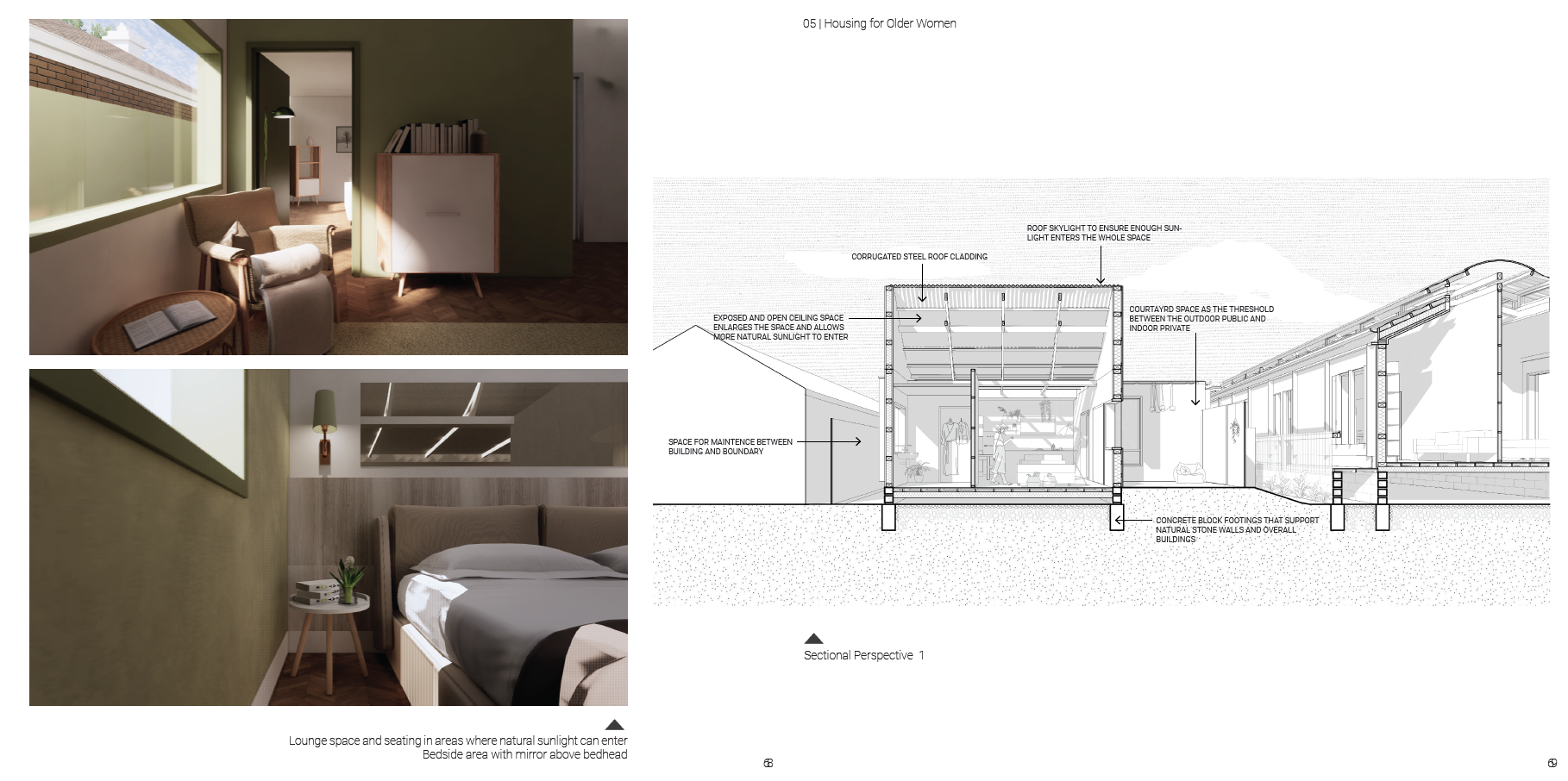
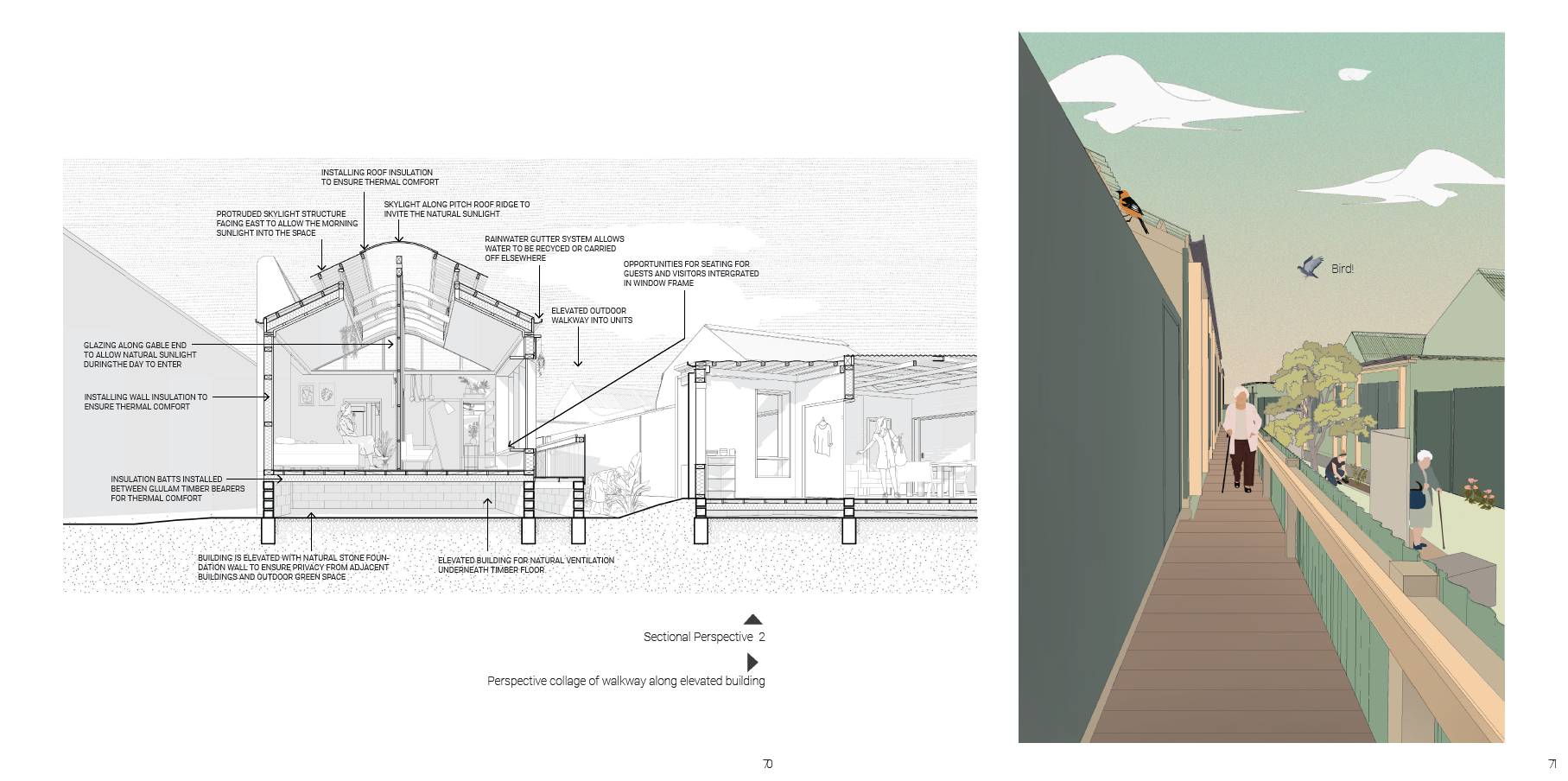
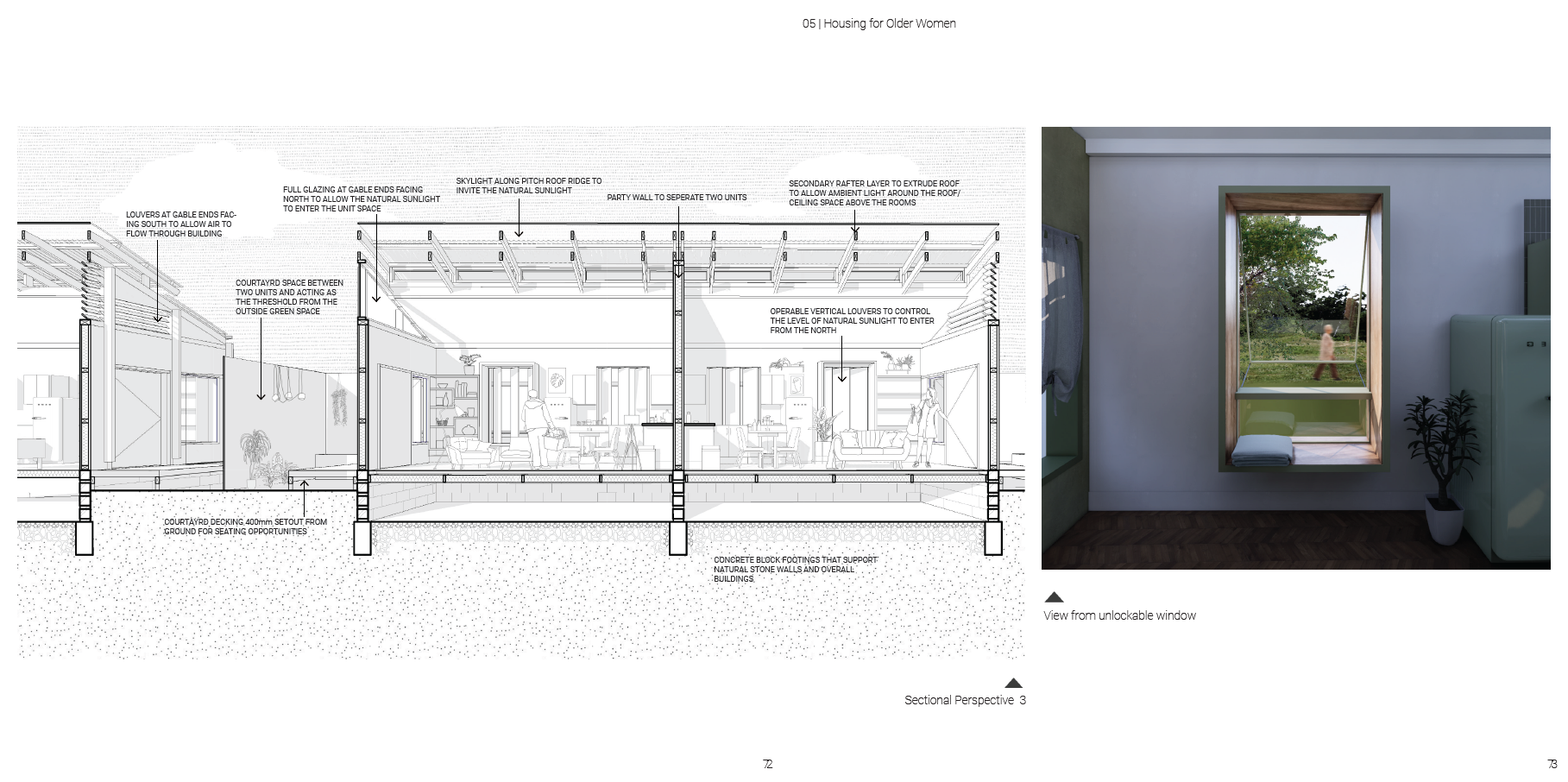
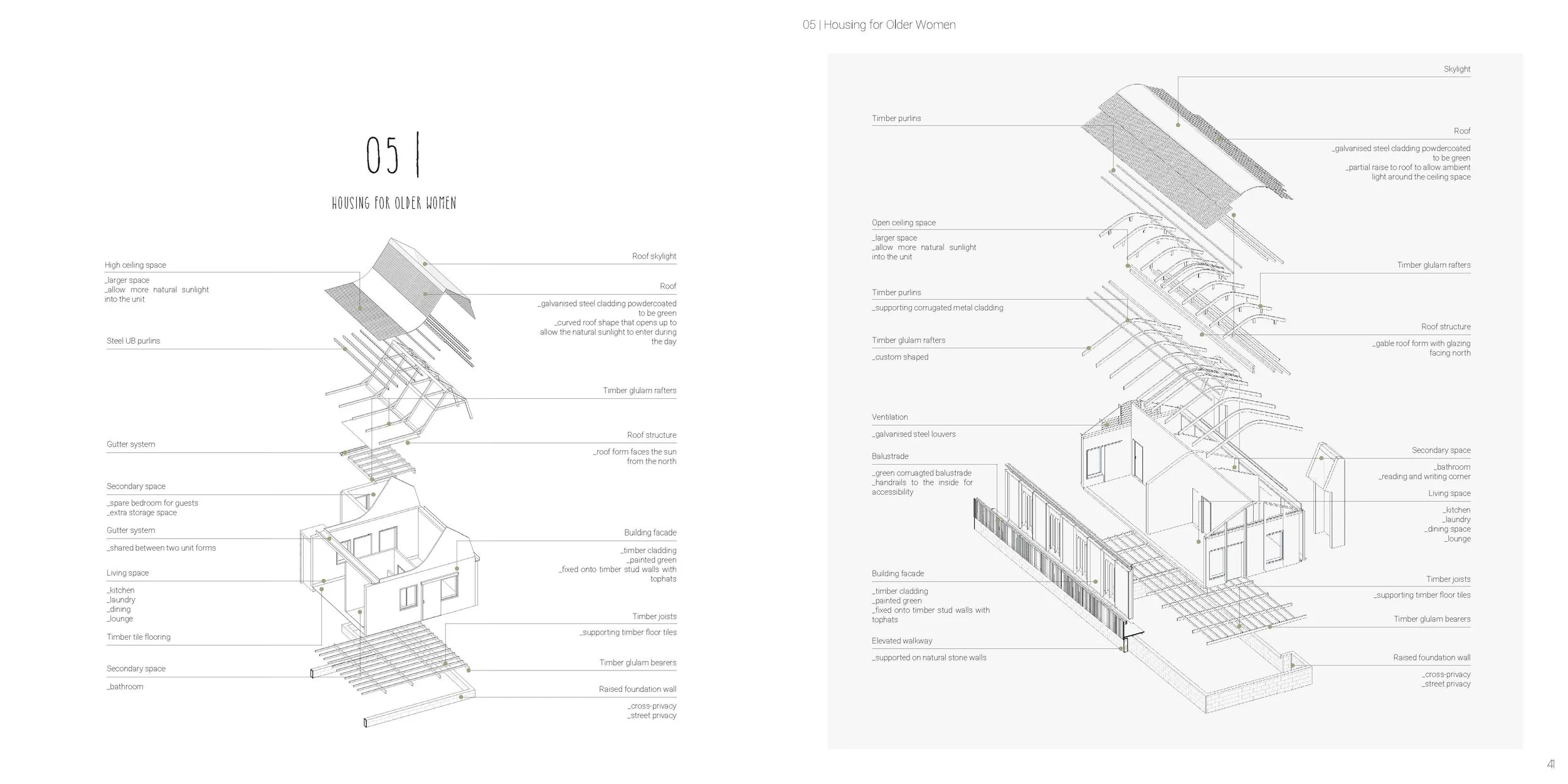
In the design, there are attempts in providing natural sunlight through the use of window louvers, large glazing, and roof skylights. Seating throughout the central green space further invites and urges individuals to sit down and build on an understanding for each other as they engage in casual encounters, as the project’s theme and conceptual belief is all about strengthening and building on mental and physical health over time so an attempt to create moments throughout the building such as the bbq, lounge, gardening, and open green space area invites the older women into communication with one another.
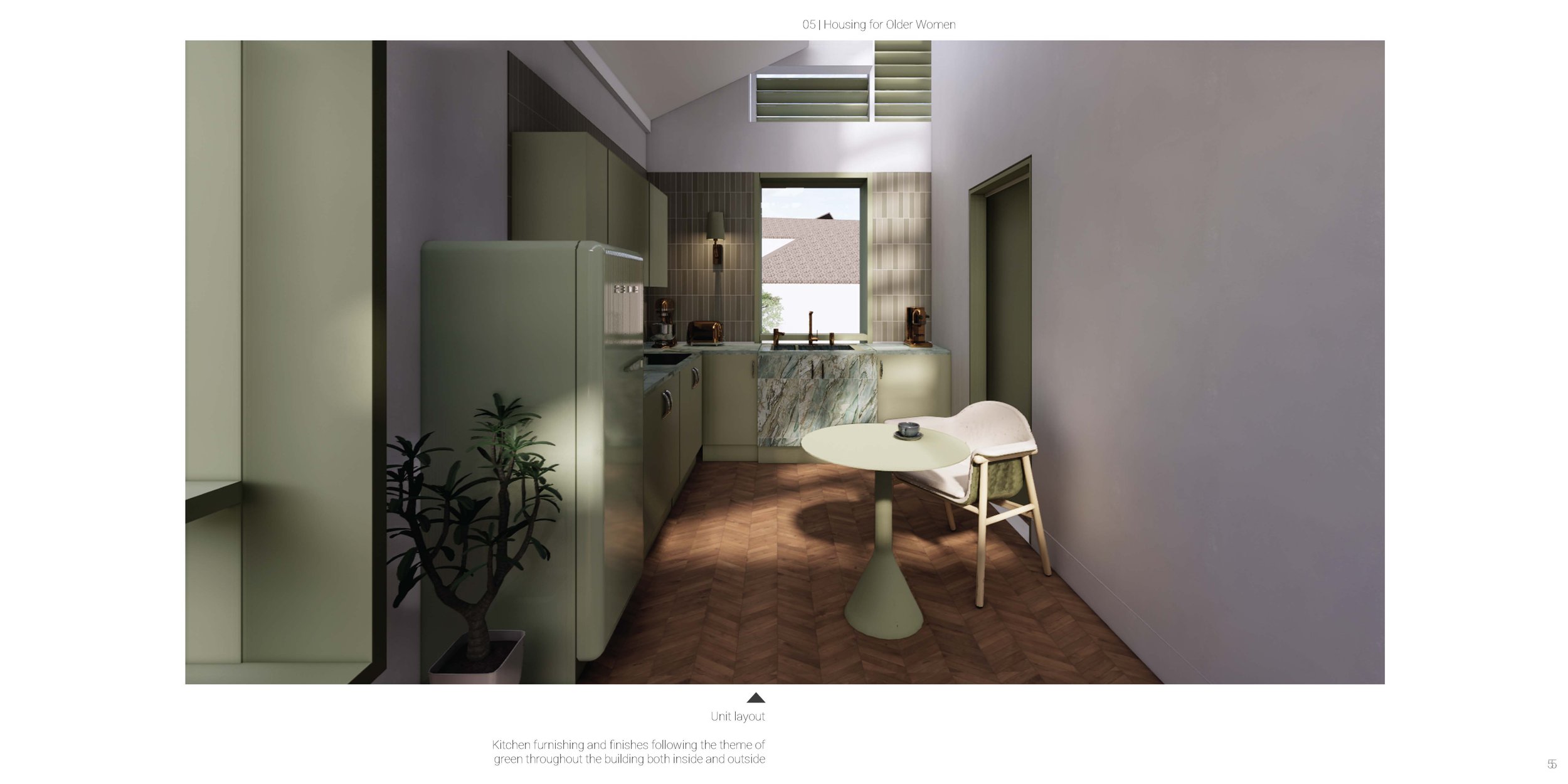
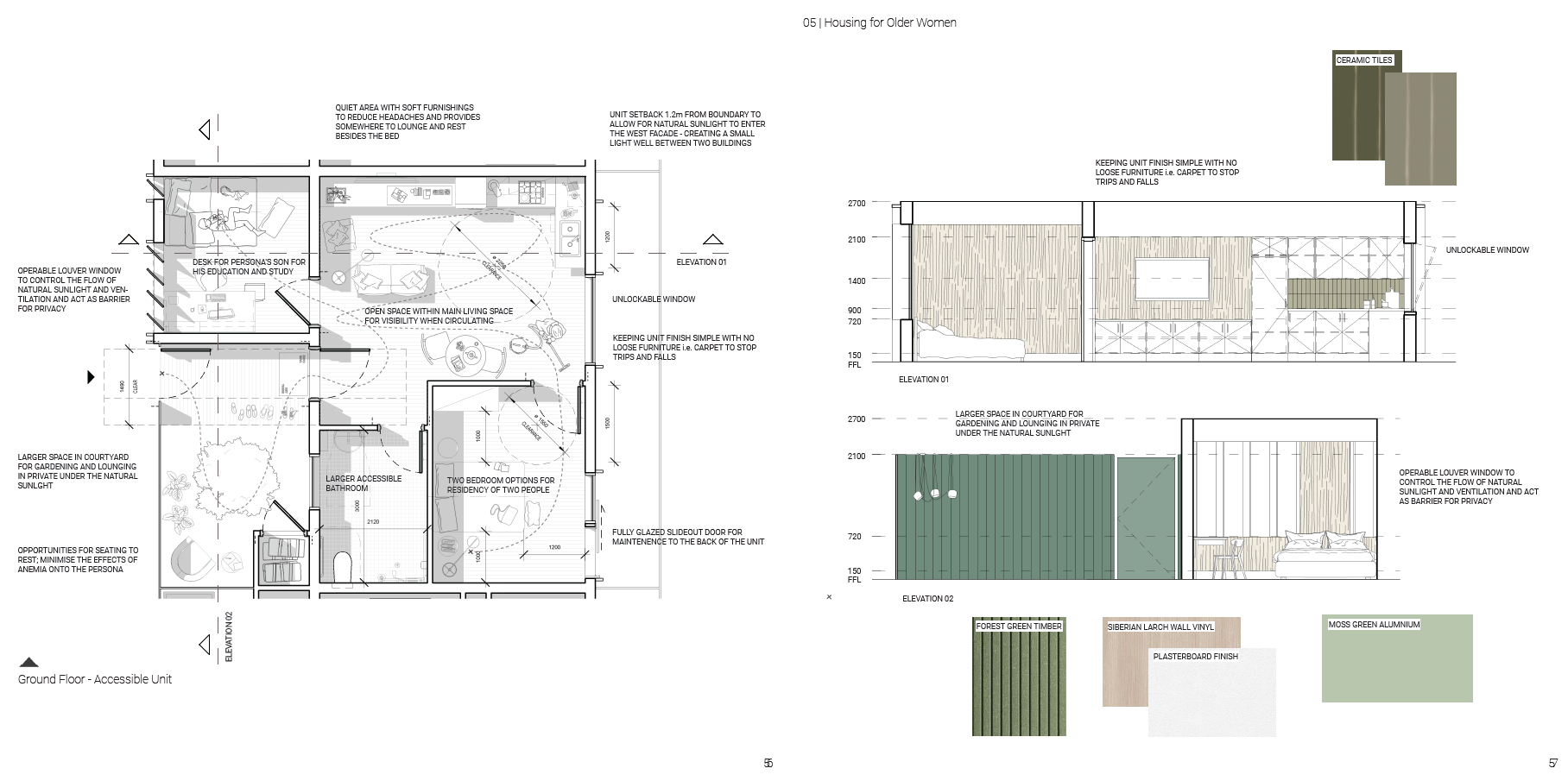
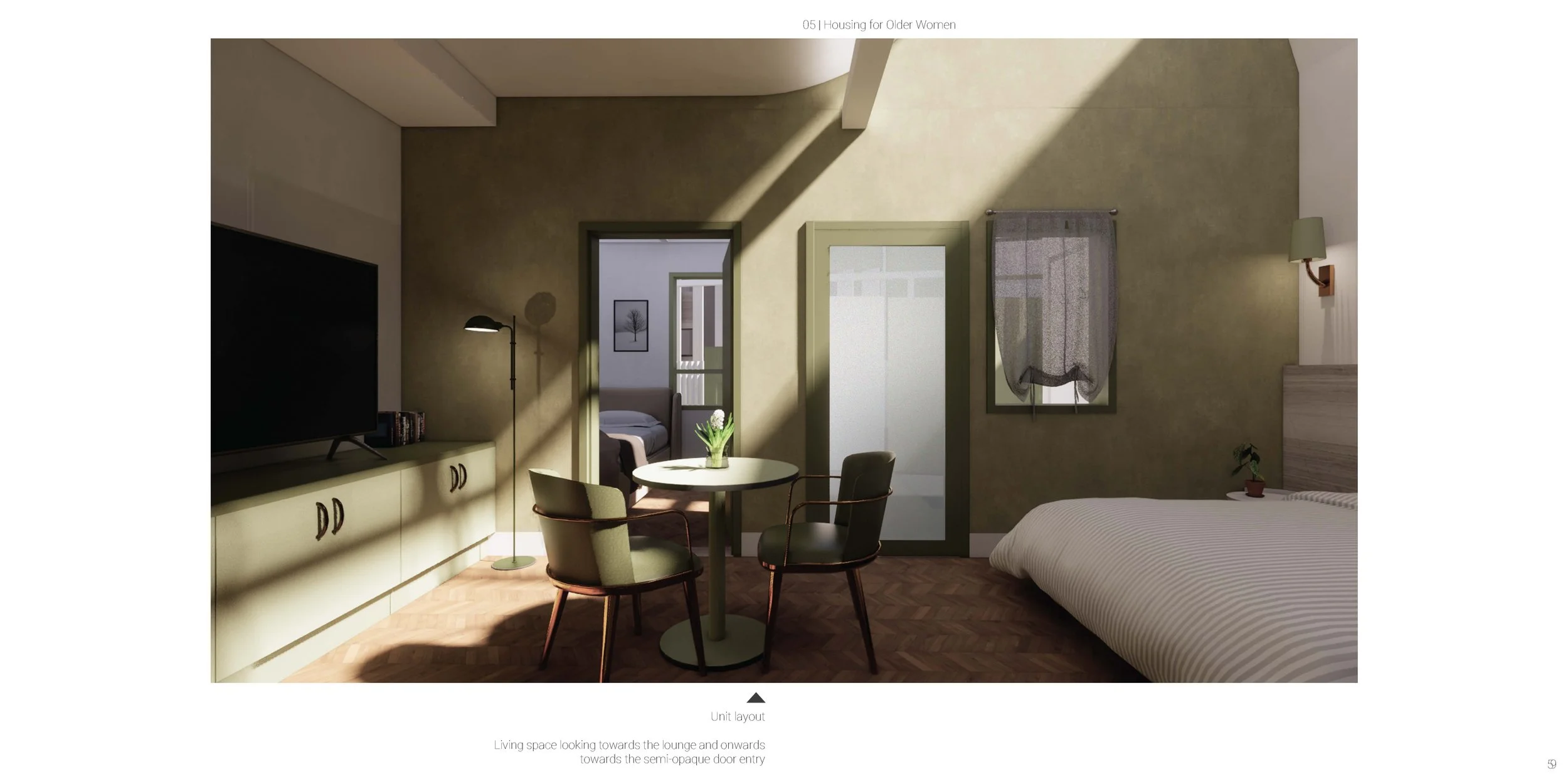
The first unit layout concentrates on an open plan space that has easy circulation. For older women that may slowly become hard of hearing due to their age, proposing semi- transparent glazing at doors allows them to view shadows and movement on the other side. But also having reflections throughout the space such as a mirror splash back in the kitchen so she’s further aware of her surroundings.
The second unit layout prioritses the needs of someone that may have caretakers or visitors as it mainly utilises external storage in the courtyard area and having a sofa bed in the living space available for guests. This unit plays along the idea of security through the linear shape living space allowing them to see the whole length of their unit with peace of mind. There are also opportunities for reading and writing during early mornings through the use of a corner in the bedroom with a skylight above that captures the morning natural sunlight from the east.
The accessible unit layout takes into account someone, such as a child, living with them as the living space is larger for two inhabitants and the child’s bedroom has space for a study desk. The unit is also more open plan, with no loose furniture such as carpet, to help facilitate growing in place and any symptoms and difficulties that come with age such as anemia, allowing them to become more aware of their surroundings, whilst also having opportunities for seating both in the courtyard and living space.
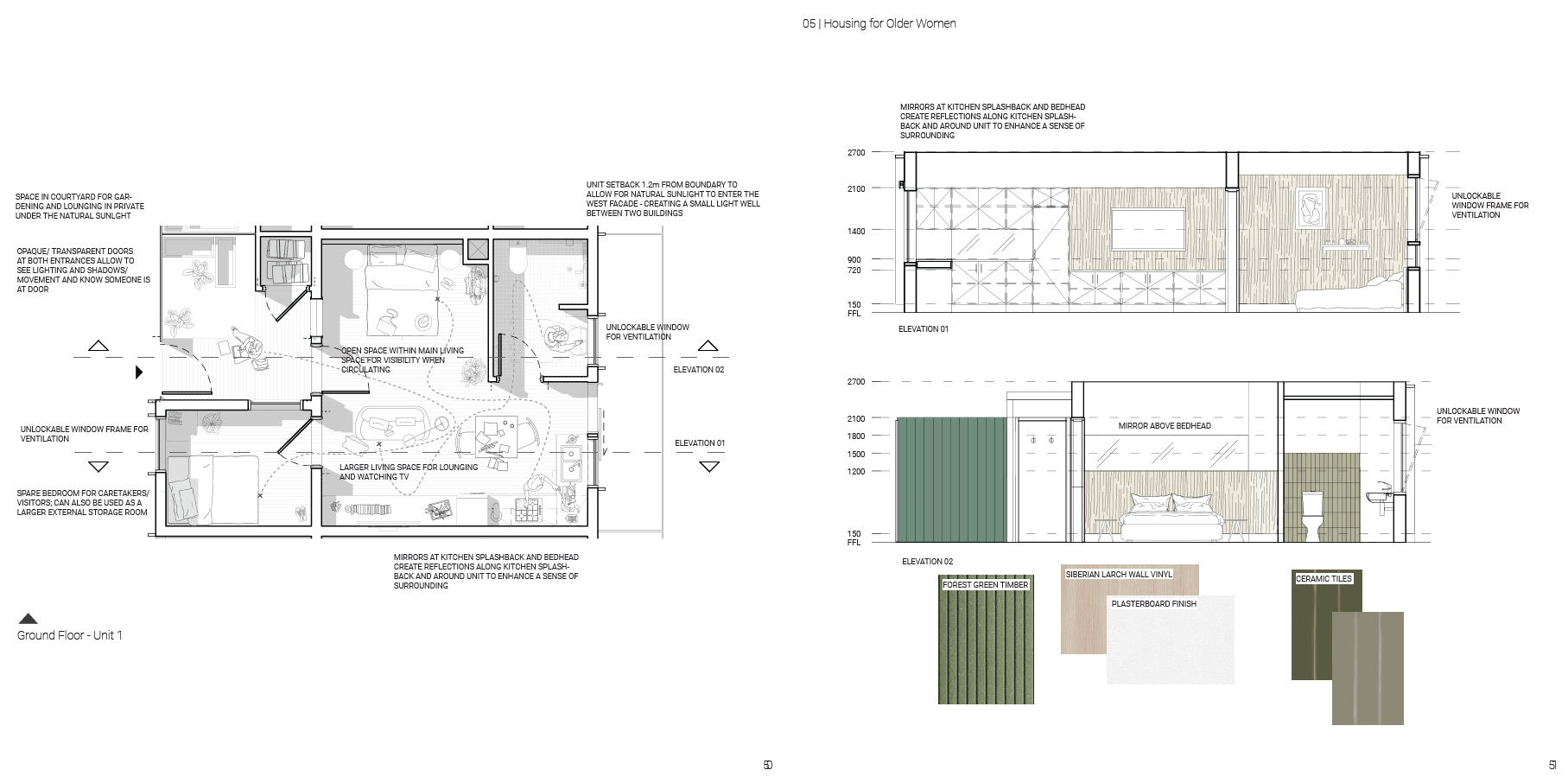
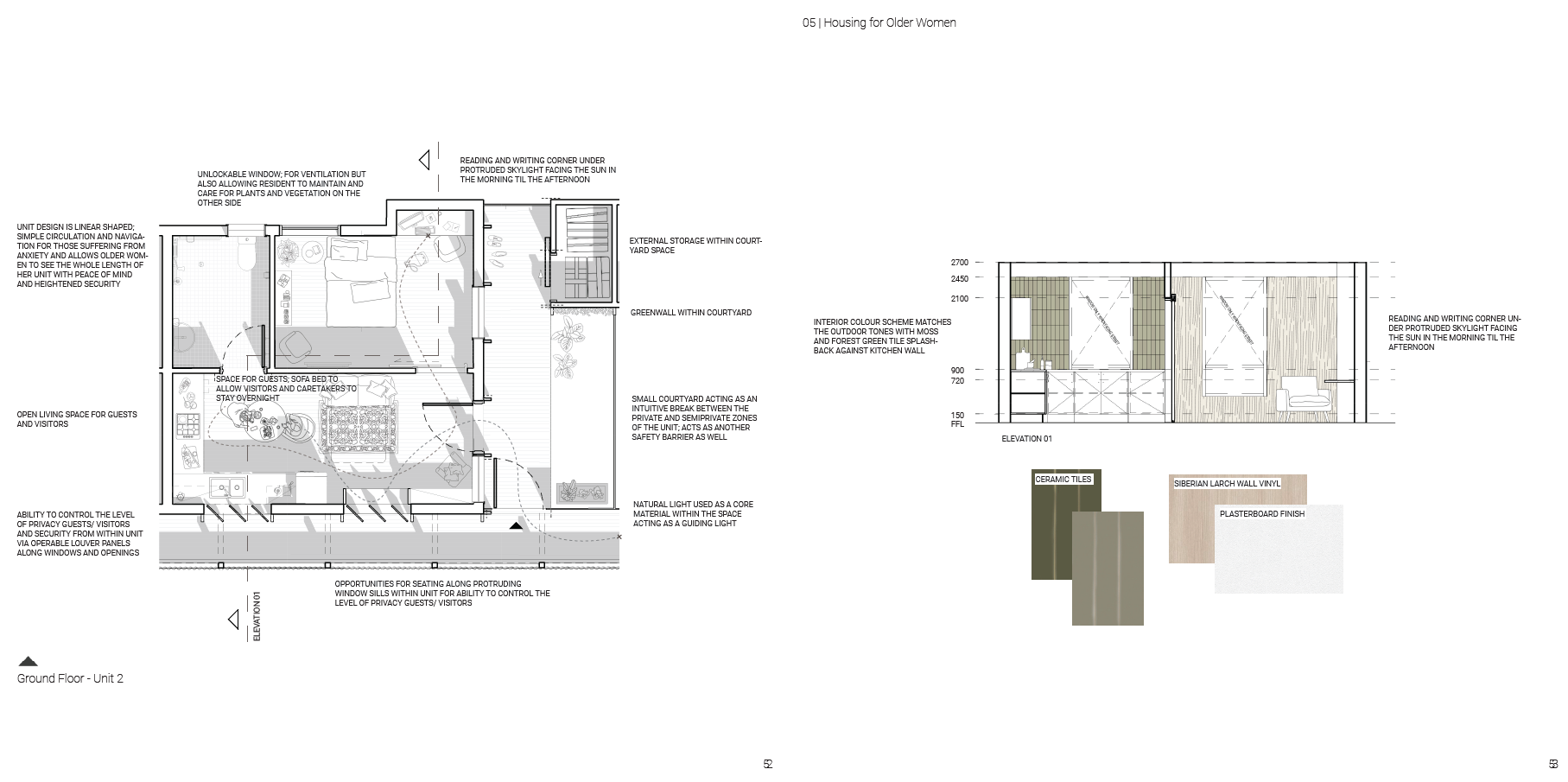
PROPOSED FLOOR PLAN AND TYPICAL UNIT PLANS
The sectional perspective illustrates these moments of interaction with each other and within their units as they go about their day to day activities. As well as illustrating the shared interactions of the market between the lounge and outside street, juxtaposed against the adjacent more private and quiet unit space.
Similarly, portraying the varying moments of gardening outside over time compared to the privacy of the units on the site. And the threshold of the courtyard as they transition and go through this collective experience of going inside, then outside, and inside again.
The larger sectional perspective takes a closer look at the construction process of two completely different building typologies as they surround a central green space within the centre, allowing the older women to wander, socialsie and perform their daily activities within the proposed site. Materiality within the design, the exterior and interior, is demonstarted through the sectional perspectives and the perspectives that allow an insight into the materiality and design of the spaces.